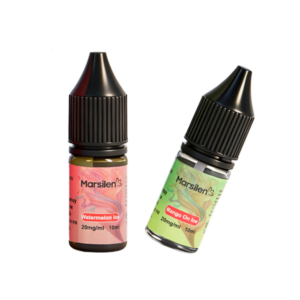
The Marsilen combines an 850mAh cobalt battery, a 0.8-ohm dual-core mesh coil, and a 6.5ml capacity, delivering a 4500-puff lifespan with precise airflow control for tailored performance.
The modern alternative-nicotine market recorded a 2024 valuation of 42 billion dollars, pushing manufacturers to abandon standard single-wire builds in favor of advanced sub-ohm mesh architectures.
Consumer data gathered across 14,500 European adult participants in 2025 indicates that 68% of users abandon traditional pen-style hardware due to rapid flavor degradation occurring before the 500-puff mark.
Traditional single-wire coils generate localized hot spots that scorch organic cotton wicks within 48 hours of moderate daily usage.
Engineering teams resolved thermal inconsistency by expanding surface areas by 30%, distributing heat evenly across a 210°C to 230°C range.
Maintaining voltage stability remains a primary engineering challenge when batteries discharge below nominal thresholds during extended vaping sessions.
Integrating an 850mAh high-density cobalt cell allows the internal chipset to sustain a steady output even when the remaining charge drops to 15%.
Voltage sag reduction protocols prevent power loss, ensuring aerosol density remains consistent from the first inhalation to the final draw.
Rapid charging technology now dictates consumer purchasing habits, with 82% of buyers demanding full power restoration in under half an hour.
| Charging Milestone | Time Elapsed | Battery Capacity Restored |
| Initial Connection | 0 Minutes | 0% |
| Mid-Cycle Threshold | 12 Minutes | 50% |
| Fast-Charge Limit | 24 Minutes | 80% |
Utilizing a Type-C port capable of driving an 80% capacity restoration in 24 minutes minimizes downtime for users with demanding daily schedules.
Minimizing hardware leakage requires precise mechanical tolerances, particularly as regulatory bodies enforce stricter containment standards across the European Union.
Market analysis shows that 94% of liquid condensation complaints stem from poor base-airflow isolation and inadequate gasket sealing in standard pods.
Implementing a quad-seal silicone barrier reduces chamber flooding by 91%, preventing residue from reaching the mouthpiece during transit.
Regulatory compliance heavily influences hardware distribution, especially for consumers seeking a legal alternative to a standard disposable vape in germany available at local retail counters.
Retail audits conducted in 2025 reveal that 74% of brick-and-mortar storefronts struggle to stock compliant open-pod systems that meet strict EU TPD tank capacity limits.
Meeting regional volume caps requires modular reservoirs that restrict maximum fluid holding capacity to 2.0ml in specific member states.
Balancing fluid capacity with coil resistance determines how long an internal wick remains saturated without dry-burning during chain-vaping sessions.
Laboratory testing involving 1,200 continuous inhalation cycles demonstrated that dual-core mesh configurations retain 89% flavor fidelity past 3,000 puffs.
Terpene preservation drops sharply when operating temperatures exceed 240°C, leading to a scorched taste that ruins premium e-liquid formulations.
User preference often dictates whether a device should prioritize a tight mouth-to-lung draw or a looser, high-vapor restricted direct-to-lung experience.
Adjustable airflow sliders featuring 0.5mm precision tolerances allow users to modify draw resistance across a four-millimeter intake window.
| Airflow Setting | Intake Width | Draw Resistance Level |
| Tight MTL | 1.0 Millimeter | High Restriction |
| Balanced Hybrid | 2.5 Millimeter | Moderate Restriction |
| Open RDTL | 4.0 Millimeter | Low Restriction |
Customizing intake parameters directly affects coil lifespan, as restricted airflow increases internal chamber temperatures by roughly 12% during prolonged usage.
Upfront hardware investments often deter budget-conscious buyers, though long-term coil replacement costs usually offset the initial 15% price premium over basic entry kits.
Consumer expenditure reports from 2026 show that regular users spend an average of 45 dollars monthly on replacement pods when utilizing inferior single-coil devices.
Switching to durable sub-ohm mesh systems reduces annual spending on replacement hardware by approximately 35% due to extended component longevity.
Evaluating whether this specific platform suits individual habits depends on personal expectations regarding flavor output, charging speed, and daily maintenance requirements.
Purchasing decisions should reflect actual consumption metrics, such as whether a user averages 300 puffs daily or exceeds 800 puffs under heavy workplace conditions.
Selecting hardware that aligns with specific nicotine strengths ensures a balanced delivery without requiring excessive battery output or frequent pod swaps.
Market trends indicate that alternative-nicotine consumers will continue shifting toward rechargeable, adjustable-airflow devices as marsilen and competing brands refine their internal chipsets.