Importing ceramic tiles from Foshan begins with the project schedule: location, exposure, dimensions, finish, test requirements, shade expectations, quantity, and delivery plan. Buyers should compare suppliers against that controlled brief, verify evidence for the exact product, approve traceable samples, and coordinate carton identification before shipment.
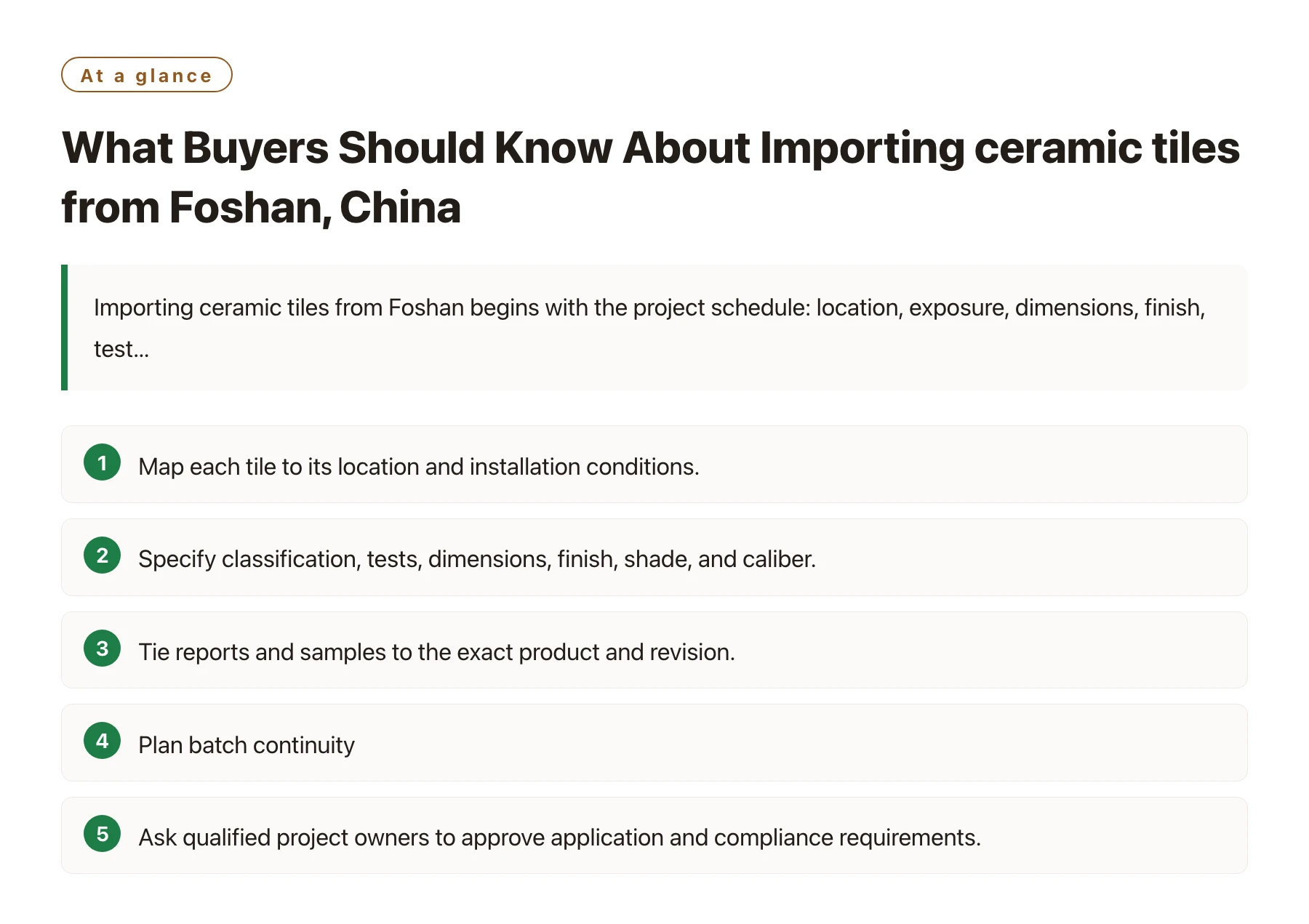
Key takeawaysMap each tile to its location and installation conditions. · Specify classification, tests, dimensions, finish, shade, and caliber. · Tie reports and samples to the exact product and revision. · Plan batch continuity, carton labels, pallet layout, and receiving checks. · Ask qualified project owners to approve application and compliance requirements.
Tile quotations can look similar while describing different bodies, finishes, size tolerances, batches, or packaging. A clear schedule makes these differences visible before a project commits to a supplier.
Start with the project use and tile schedule
Before requesting prices, map each tile to its location and use. A project may include dry interior floors, wet rooms, exterior paving, walls, stairs, trims, and pool surrounds, each with different exposure and installation demands. Create a schedule with room or zone, product code, size, finish, color, quantity, spare allowance, and required delivery sequence. This prevents a single broad description from being applied to products with different functions.
State whether the tile will face water, freeze-thaw exposure, chemicals, heavy traffic, direct sunlight, or frequent cleaning. Clarify substrate, grout joint, installation system, and slip or abrasion expectations with the project designer. These needs depend on the destination code and installation, so ask the qualified specifier to set acceptance criteria instead of inferring suitability from a catalog image.
Name the relevant standard and market requirements in the purchase specification. ISO 13006:2018 sets classifications, characteristics, and marking requirements for ceramic tiles and points to the ISO 10545 series for test methods. Confirm which parts, editions, and additional local requirements apply to the intended product and project.[1]
Compare classification and test evidence carefully
Ask the factory to identify the tile’s forming method, classification group, declared water absorption, and relevant product characteristics. Request reports tied to the exact factory, product body, surface, size range, and production method. A test result for a similar series may not cover a different body, glaze, thickness, or finish. Record report date, laboratory, method, specimen identity, and any stated limitations.
Water absorption is one classification property, not a complete prediction of field performance. Consider breaking strength, abrasion or surface wear, chemical resistance, dimensional tolerances, and other characteristics relevant to the specified use. For stairs, outdoor areas, or wet floors, clarify the required slip assessment and test method with the designer or local authority. Different methods and conditions may not be directly comparable.
Be precise about terms such as porcelain, full body, rectified, polished, and anti-slip. Ask suppliers to define the term using measurable characteristics or a named standard. Marketing language alone cannot establish that two products share the same composition, test outcome, or intended application.
Review dimensions, shade, caliber, and finish
Specify nominal size and the allowed working dimensions, thickness, squareness, edge treatment, and flatness where relevant. Rectified tiles need clear dimensional expectations and installation joint guidance from the designer. Confirm how the supplier labels caliber and how cartons are sorted so that installers do not unknowingly mix size groups on one surface.
Shade variation can be an intentional design feature or an unwanted mismatch. Identify the approved color reference and variation range, and ask the supplier to explain its shade coding across production batches. Review a representative spread of tiles under suitable light rather than approving one isolated piece. Record whether the project accepts variation and how multiple batches should be sequenced.
A surface finish can change appearance and cleaning needs. Request samples for polished, matte, textured, or structured surfaces in the exact color and body. For printed designs, identify the pattern repeat, face count, orientation, and acceptable repetition frequency. Confirm that edge, corner, stair, and trim pieces are included where the design needs them.
Approve a traceable sample and control changes
Use a sample board or carton set large enough to evaluate color, pattern, edge, surface, and visual variation. Label each approved sample with product code, size, finish, shade, caliber, date, and supplier revision. Keep a retained sample with procurement records. The approved reference should be the one used for production and inspection, not an unmarked showroom sample that may differ from the quoted item.
For a project order, confirm whether the delivered quantity can come from one production batch or must be split. If multiple batches are expected, request a batch plan and compare shade and caliber records before dispatch. A substitution in clay body, glaze, print, factory, or firing process should trigger written review because it may affect appearance or tested properties.
Ask the supplier to notify the buyer before making any change that affects dimensions, surface, packaging, test evidence, product code, or production site. Define who can approve revisions and what evidence is required. Keep purchase order, drawings, sample sign-off, reports, and change decisions aligned by revision date.
Plan packaging, loading, and receiving
Agree on carton count, pieces per carton, net and gross weight, pallet pattern, and identification labels before freight booking. Specify corner protection, separators, moisture protection, pallet quality, stacking limits, and handling marks. Ceramic tiles are vulnerable to edge impact and bending loads, so packaging should match the actual size, thickness, route, and handling conditions rather than follow a generic carton template.
Require external marks to show product code, size, finish, shade, caliber, batch, quantity, and carton sequence as appropriate. Keep labels readable after pallet wrapping. If cartons for several project zones share a container, define how pallets will be grouped and identified so the receiver can allocate goods without opening every box.
At destination, inspect carton condition and sample representative units before installation. Record broken edges, chips, cracks, shade differences, and mismatched labels by carton and batch. Keep photographs and counts, segregate affected material, and notify the supplier before installation or mixing. The buyer and project team should decide whether a claim, replacement, or documented concession is appropriate.
Build a like-for-like supplier comparison
Send every supplier the same schedule, drawings, performance requirements, sample references, packaging needs, and delivery assumptions. Ask them to mark each requirement as met, deviated, or unconfirmed and to state exclusions. Compare quoted unit, carton, and project quantities; tooling or sample costs; lead time; batch continuity; packaging; and transport terms together.
For buyers sourcing from Foshan, Foshan ceramic tile grades and packaging can be considered as a starting point for supplier coordination. Define the requested scope, such as factory identification, technical document collection, sample follow-up, or pre-shipment checks. Have the project designer and qualified testing or compliance specialists approve technical suitability and destination requirements.
Before release, check that the selected supplier’s product code, test documents, approved sample, quote, and packaging plan describe the same product. Confirm the quantity and spare allowance with the project owner, then preserve the evidence set for receiving and any later quality review.
Sources
Frequently asked questions
Does a product grade by itself show that a tile suits a project?
No. Confirm the classification basis and the characteristics needed for the exact location, installation, exposure, and destination requirements with the project specifier.
Why should shade and caliber appear on the purchase documents?
They help the buyer and receiver identify production groupings and reduce unintended mixing of visibly or dimensionally different cartons.
Can one sample represent all production batches?
It represents an approved reference, but batch continuity and variation still need to be managed. Ask for batch identification and review representative production evidence.
What should be checked before container loading?
Confirm product codes, cartons, batch labels, counts, package condition, pallet layout, and shipment documents against the approved schedule and packing plan.