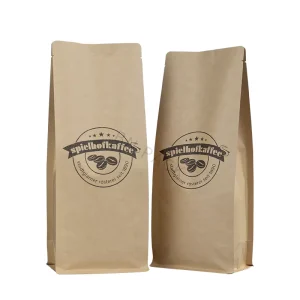
By 2026, the shift toward sustainable commercial coffee packaging is driven by a 4.78% CAGR growth rate, targeting a $1.4B global valuation by 2034 while addressing the 500-year degradation timeline of traditional aluminum-lined pouches through mono-PE materials, certified PLA bio-polymers, and fiber-based barriers that maintain oxygen transmission rates below 0.5 cm³/m²/day.
Traditional flexible bags rely on multi-layer PET/AL/PE laminates that end up in landfills, prompting 62% of European roasters in 2024 to convert toward mono-material polyethylene (PE) structures. This switch allows the pouch, zipper, and degassing valve to enter standard municipal recycling streams as a single waste category, reducing supply chain carbon footprints by 38% compared to complex aluminum-foil barriers.
Single-polymer designs eliminate the thermal separation processes required for mixed materials, enabling direct entry into existing residential recycling streams without structural degradation during sorting.
By maintaining light, moisture, and gas barrier protections identical to historic aluminum layers, high-density mono-PE films preserve coffee freshness while supporting circular collection infrastructures. The adoption of these single-polymer systems leads directly into raw material substitutions, where petroleum-derived plastics give way to certified plant-based polymers in flexible packaging lines.
Plant-derived materials like Polylactic Acid (PLA) and Polyhydroxyalkanoates (PHA) replace fossil resins, allowing flexible pouches to achieve TÜV OK compost HOME certification within a 26-week testing cycle. In 2025, laboratory evaluations on 1,500 bio-based packaging samples demonstrated a 90% organic breakdown rate under standard ambient soil temperatures of 20°C.
Industrial composting relies on specialized facilities reaching 58°C, whereas home-compostable packaging processes naturally in backyard gardens alongside residential organic waste.
Moving from fossil plastics to home-compostable bio-polymers creates a natural transition toward paper-based innovations, where renewable wood fibers replace plastic surfaces entirely while preserving barrier performance.
| Packaging Material Type | Oxygen Transmission Rate (cm³/m²/24h) | Recyclability Rate (2025 Data) | Average Decomposition Time |
| Traditional PET/AL/PE | < 0.1 | 2% | 500 Years |
| Mono-Material PE | < 0.5 | 68% | Recyclable |
| FSC Kraft + Bio-Coating | < 0.8 | 84% | 12 Weeks (Compost) |
| Certified PLA/PHA | < 1.2 | 91% (Compost) | 26 Weeks (Home) |
FSC-certified kraft paper lined with water-based dispersion coatings allows roasters to retain 85% paper fiber composition, ensuring full compatibility with curbside paper pulping equipment. During 2024 repulpability trials on 300 metric tons of coated paper, pulp recovery rates exceeded 92%, proving that organic fiber barriers effectively protect against coffee oil migration while fitting into standard recycling setups.
Dispersion coatings act as a micro-thin liquid seal on paper fibers, preventing humidity infiltration without sticking to processing equipment during fiber recycling.
High-fiber paper pouches establish an effective barrier for retail bags, setting up the framework for bulk logistics where commercial coffee packaging moves away from single-use items entirely through closed-loop container systems.
Roasters supplying cafes use commercial coffee packaging in the form of 304-grade stainless steel drums and food-grade HDPE totes equipped with serial QR codes to track 100+ refill cycles per unit. Logistics tracking across 80 distribution routes in 2025 showed that re-usable bulk containers reduced single-use inner lining waste by 4.2 metric tons per 1,000 retail clients annually.
Closed-loop return logistics rely on automated washing systems running at 85°C to sanitize stainless steel kegs between wholesale coffee bean deliveries.
Bulk return networks lay the groundwork for changes in single-serve coffee systems, where individual portion capsules require eco-friendly material upgrades to match bulk sustainability standards.
Single-serve pods consume substantial material resources per gram of coffee, driving a market transition toward 80% recycled content aluminum and plant-fiber capsules. In 2024, test parameters covering 5,000 single-serve pods revealed that bio-sourced fiber capsules decomposed completely within 12 weeks of municipal organic processing, returning nutrients directly to agricultural soils.