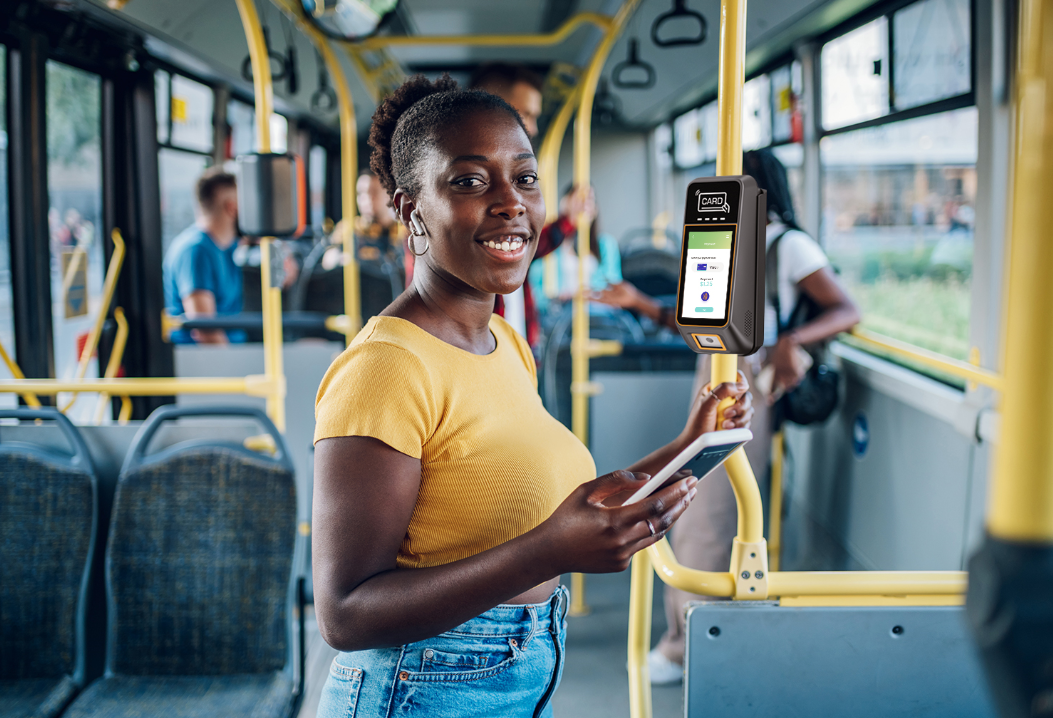
The Telpo T20 is built for transport operators that need one device to handle multiple ticketing formats, from contactless cards to QR and mobile payments, while still working in outdoor stations and buses. It supports open-loop and closed-loop systems in one unit, and this reduces the need for separate validation hardware across routes and networks. The device also supports ISO14443 Type A/B cards, Mifare, Cipurse, Calypso, Felica, and EMV Contactless L1 standards such as Paywave and Paypass. In daily use, it also reads QR codes, Aztec codes, barcodes, and paper tickets through hardware decoding, which keeps scan time low in busy boarding windows where even a few seconds matter. The display system uses a 7-inch touchscreen with 500cd/m² brightness and anti-glare treatment, which keeps text readable under direct sunlight and mixed lighting conditions. In outdoor transport use cases, readability directly affects how fast passengers confirm ticket status before boarding. The device also runs on Telpo OS based on Android 12, while Linux is optional for integration with existing ticket systems, giving operators flexibility depending on system maturity and backend structure. In some deployments, operators combine both OS options across different routes, depending on integration depth requirements. The hardware protection level is designed for long-term exposure in public environments. IP65 sealing protects against dust and water jets, while IK08 impact resistance supports high-frequency public interaction. These ratings matter in environments where devices are mounted on bus entrances or open-air platforms. A pole-mounted installation structure reduces setup time and keeps wiring stable inside a lockable enclosure. This reduces unauthorized access and helps maintain consistent uptime across distributed stations. Connectivity covers 4G, dual-band Wi-Fi, and Bluetooth, with GPS built into the unit for real-time location-based service. Optional external antennas support GNSS, 4G, 3G, and 2G, which helps when signal strength drops in tunnels or dense urban zones. Multi-network design is important when transaction data must be sent instantly to backend systems without delay. In transport networks with frequent route changes, this allows consistent reporting across different operational areas.
“The system supports both open-loop and closed-loop payment flows, including transit cards and bank card contactless payments, while also handling QR-based mobile payments in the same workflow.”
Security and integration capacity are expanded through 8 SAM card slots, which allow multiple secure modules to be installed at the same time. This supports complex transit ecosystems where different operators or payment providers share one hardware platform. The scanning module processes QR, Aztec, and barcode formats using hardware decoding, which improves response time when passengers present tickets from different sources. MDM remote management is included for fleet-level control of devices. Operators can update, monitor, and configure terminals across multiple stations without physical access. This is important in systems where devices are spread across large geographic areas. Over time, this reduces manual maintenance visits and keeps configuration consistent across the network. More technical specifications are summarized below:
| Component | Specification |
|---|---|
| Display | 7-inch touchscreen, 500cd/m² |
| OS | Telpo OS (Android 12), Linux optional |
| Payment | Open-loop + closed-loop support |
| Connectivity | 4G, Wi-Fi, Bluetooth, GPS |
| Security | 8 SAM slots |
| Protection | IP65, IK08 |
A reference implementation of the system can be seen here: Telpo T20 which integrates all listed functions into a single outdoor-ready terminal designed for transport environments such as buses, metro stations, and access control gates.